

A family business can operate for years without openly discussing its most important questions.
- Who will eventually lead?
- Who will own the company?
- Will ownership be equal?
- What authority does the next generation actually have?
- How will family members be compensated?
- When will the founder step back?
- What role will inactive siblings play?
These questions remain unspoken because the answers feel dangerous.
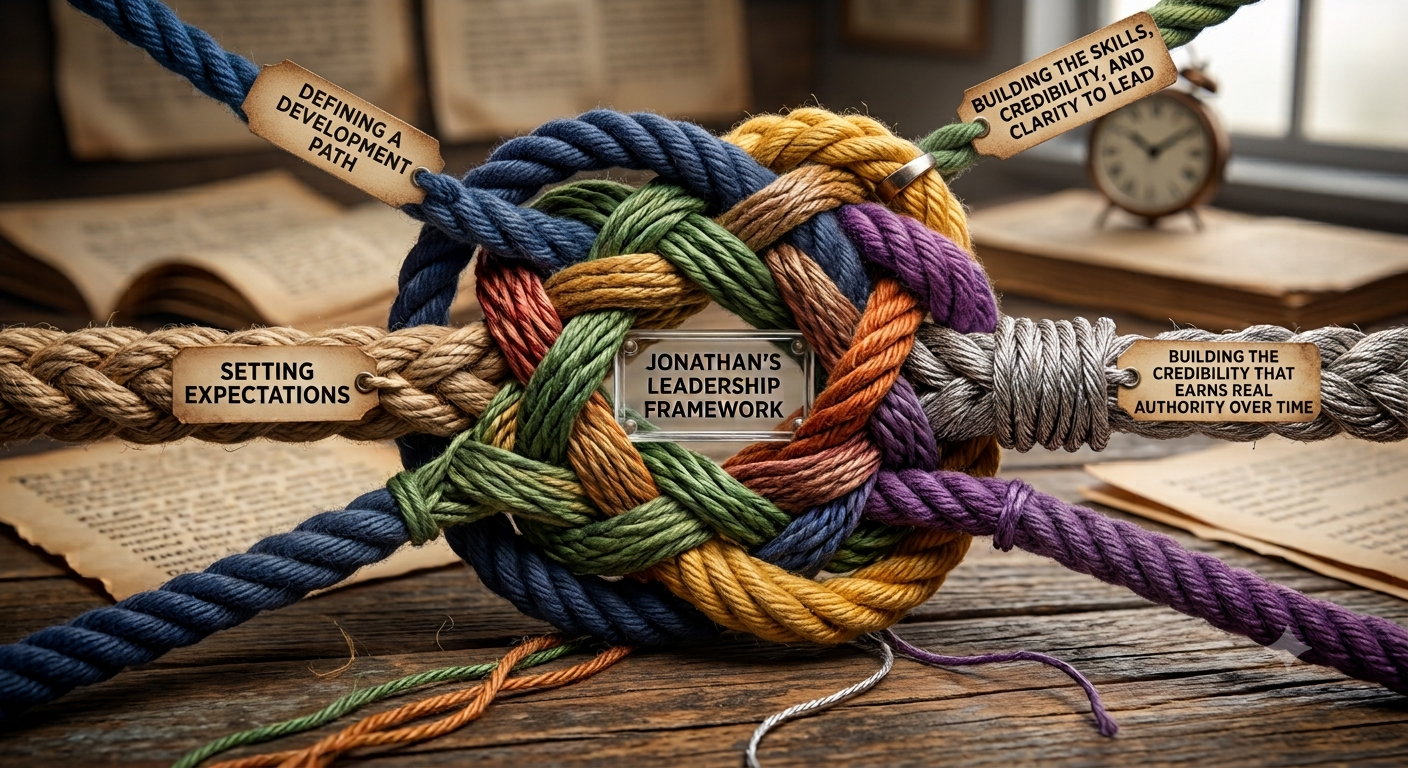
Over time, the family business becomes wrapped in what I call a tightly woven knot of unspoken plans.
What the Knot Looks Like
The knot may look like a founder saying, “Of course the kids will figure it out,” without defining authority, ownership, compensation, voting rights, or a transition timeline.
It may look like a daughter who is already leading the company emotionally and operationally. She is strategic but still needs her father’s permission to make important decisions.
It may look like a son who assumes he is the successor because he has worked at the company the longest, while his siblings believe ownership and control should be divided equally because they are family members.
It may look like a founder who says he wants to step back but still approves every meaningful decision.
It may look like non-family executives who understand exactly where the problems lie but have learned that speaking openly is risky.
Spouses, siblings, in-laws, cousins, executives, and owners may all hold different visions of the future. None of those versions has been placed on the table. That is the knot.
Why Families Avoid the Conversation
Family business owners are not necessarily avoiding these subjects out of carelessness. They avoid them because the subjects carry emotional meanings that extend far beyond the business.
- A conversation about leadership can become a conversation about love.
- A conversation about ownership can become a conversation about fairness.
- A conversation about compensation can become a conversation about personal worth.
- A conversation about authority can become a conversation about trust.
- A conversation about succession can become a conversation about aging, mortality, and identity.
- The family therefore continues to work around the knot.
They solve short-term problems. They make temporary compromises. They allow different people to maintain different assumptions.
This may preserve surface harmony for a time. It does not create alignment.
Do Not Begin with a Knife
When an outside advisor sees the confusion, the temptation may be to cut through it quickly.
- Demand a decision.
- Force a timetable.
- Tell the founder to step aside.
- Tell the siblings to separate their responsibilities.
- That approach often creates defensiveness.
- The family is not a group of independent businesspeople negotiating an ordinary transaction. These individuals may have decades of shared history, including old wounds, obligations, rivalries, dependencies, and expectations.
The knot must be untangled carefully. The process begins by pulling on one thread at a time.
Thread One: Business Reality
The safest starting point is often the current business.
- What is working?
- What is not working?
- In which areas is the company overly dependent on one person?
- Where are decisions getting stuck?
- Where are employees unclear about authority?
- Where is growth being constrained?
Which problems are affecting profitability, execution, customer service, or employee retention?
Beginning with business reality allows the family to look at observable conditions before entering more emotionally charged territory.
Thread Two: Roles
Family business conflict often results from people occupying several roles at once.
A person may simultaneously be:
- An owner
- An employee
- A manager
- A child
- A sibling
- A spouse
- A future beneficiary
The family must clarify which role a person is occupying in a particular conversation.
A sibling may have equal rights as an owner but very different authority as an employee.
A parent may have enormous influence within the family but no longer be the appropriate person to make operational decisions.
An inactive family shareholder may have economic rights without having management authority.
Without role clarity, people confuse ownership with employment, family seniority with business authority, and parental approval with organizational accountability.
Thread Three: Expectations
The next step is identifying what each person expects.
- What does the founder believe will happen?
- What does the successor believe has been promised?
- What do the siblings assume?
- What do key employees expect?
- What has actually been discussed?
- What has merely been implied?
- What is everyone afraid to ask?
Unspoken expectations often become future accusations.
One family member says, “You knew this was the plan.”
Another responds, “No one ever told me that.”
The problem is not always dishonesty. It is the belief that family members should somehow know what others are thinking.
Thread Four: Fairness
Fairness may be the most emotional thread.
- Should ownership be equal when one child has spent decades building the company and another has never worked there?
- Should sweat equity be recognized?
- Should voting control follow operating responsibility?
- Should inactive family members receive distributions without participating in management?
There are no universal answers.
But fairness and equality must not be treated as interchangeable concepts.
These decisions express the family’s philosophy about contribution, responsibility, inheritance, stewardship, and opportunity.
Avoiding the philosophy does not avoid the consequences.
Thread Five: The Future
Eventually, the family must discuss what it is trying to create.
- What kind of company should exist five or ten years from now?
- Who is truly capable of leading it?
- What must change for the successor to succeed?
- What does the founder need in order to feel financially secure, respected, and useful?
- What does the next generation need in order to feel trusted, empowered, and accountable?
- Which family members should participate as owners?
- Which should participate as managers?
- What role should outside executives or directors play?
- These conversations transform succession from a vague future event into a practical leadership process.
Separating What Has Become Tangled
The goal is not to create agreement in one meeting. The goal is to separate what has become tangled:
- Family from business.
- Ownership from employment.
- Control from contribution.
- Fairness from equality.
- Love from compensation.
- Legacy from resistance to change.
- Succession from retirement.
- Authority from approval.
Once these threads are visible, the family can clarify roles, define decision rights, develop the next generation, establish governance, build a leadership team, and introduce a stronger operating system.
The knot does not disappear because the family loves one another.
It becomes manageable when the family develops enough safety, structure, and honesty to speak about what the love has made difficult to say.
Diagnose the Business Before the Conflict Deepens
The issue creating the most visible tension may not be the issue creating the greatest constraint.
The free 7Qs Business Health Assessment examines your leadership dynamics, operational systems, profitability, accountability, and strategic direction to help identify where your family business is really getting stuck.
It takes approximately five minutes and provides personalized results and a practical path forward.
